Showing posts with label education. Show all posts

Monday, April 6, 2020

WHAT DO YOU SEE IN OUR FUTURE?


“I find hope in the darkest of days and focus in the brightness. I do not judge the universe.” – Dalai Lama


So, what is it we can hope for on a day that seems very dark indeed?  It is interesting that this modern day plague has come upon us at this time.  This is Easter week for Christians around the world.  Passover for the Jewish faith starts this week as well.  The holy time of Ramadan starts in a short time for Muslims.  All of these traditions are about taking time for reflection - a re-dedication to faith and rebirth of Spirit.  The Christian faith in particular celebrates the process and promise of death overcome by resurrection.  It is a “rising up” that reveals a new consciousness – an evolution of Spirit.

Consider what has transpired in but a few days.  The engines of business and commerce have slowed to an idle.  Instead of “doing” being our focus, “not doing” has become our hopeful salvation.  Will this be forever?  On course not but what can we learn from this forced “pause” in our lives? 
I spoke with a friend who lives in Los Angeles a few days ago.  The main thing he noted about how his city was being affected was that he had not seen the air so clear and fresh in years.  Taking a walk he found new life thriving.  Springtime always brings a burst of new life but with fresher air and the decrease in human activity it could flourish even more.  All over the world the reduction of human activity has produced encouraging restorations. 

Hong Kong (CNN)Factories were shuttered and streets were cleared across China's Hubei province as authorities ordered residents to stay home to stop the spread of the coronavirus.
It seems the lockdown had an unintended benefit -- blue skies.
The average number of "good quality air days" increased 21.5% in February, compared to the same period last year, according to China's Ministry of Ecology and Environment.
And Hubei wasn't alone.
Satellite images released by NASA and the European Space Agency show a dramatic reduction in nitrogen dioxide emissions -- those released by vehicles, power plants and industrial facilities -- in major Chinese cities between January and February. The visible cloud of toxic gas hanging over industrial powerhouses almost disappeared.

From the onetreeplanted.org website:
Working From Home Means Fewer Carbon Emissions
Now more than ever companies are realizing that their business can stay afloat by allowing their employees to work from home in order to keep everyone safe and healthy. A major plus to working from home is that it is good for the environment! Decreasing carbon emissions alone from the daily commute significantly improves air quality. According to The Climate Group, working from home has the potential to reduce over 300 MILLION tonnes of carbon emissions per year. Not to mention all the other awesome benefits such as work/life balance and decreased traffic congestion.

From clearer water in Venice – with dolphins even seen swimming in the city’s famous canals - to blue skies in Beijing where poor air quality is seen to be responsible for thousands of non-virus related deaths each year.  The benefits are obvious but it will be soon all forgotten unless we can learn from the lesson that Mother Nature has forced on us.  Can we take the challenge to our wellbeing as the opportunity it clearly makes evident?  
Fortunately we are not experiencing an ecological development from which it could take generations for us to restore “normal” life.  We will have our lifestyle options returned to us most probably in the near future as we develop our ability to control the infection.  The most important question is whether we will learn from this experience and recognize the turning point we are at.

From a religious and Spiritual point of view this has always been a time of reflection and renewal.  This year we have been given more reason to do some deeper consideration and an appraisal of what kind of future we want.  Yes, I know that most all of us are just praying that our lives will return to normal.  We want to vanquish the fears about everyone’s health and concerns about our own financial stability.  We are desperate to restore our freedom and independence.  Very few of us want to feel dependent on others for our wellbeing.  However, if nothing else this experience is teaching all but the most arrogant among us just how dependent upon each other we are.  This view is symptomatic of the backwards thinking that pervades our individualist society.

What do I mean by this?  Our “social” organizations are mostly focused on “getting”.  The inverse of this is a social organization based on “giving”.  Many people today believe they are very giving.  Many are.  Some give as a “tithe” which is like paying a fee for personal prosperity.  Others simply realize that sharing some of their abundance feels good and makes the world a better place by reducing someone else’s misery.  While it is usually not the intent of the giver, those that are on the receiving end are often made to feel diminished and less respected as human beings because of their failure to take care of themselves.  Particularly for someone who has been one of the “successful” members of society, there is often a sense of shame and defeat that comes with the change in fortune that a natural disaster or a virus like we are experiencing results in.  Even with a massive effort by government to restore normalcy to our lives it is quite possible the world will never be like what it was a few weeks ago. 

That can be a scary thought if you are not willing to take the attitude that “our future unfolds with hope and joy”.  One of the most valuable traits of the human species is found in our ability to adapt to whatever reality we find ourselves in and use our imagination and vision to find new paths into our future.  I believe what we are currently experiencing is the symptom of flaws in the current structure and a clear indication that is time to reinvent ourselves and the way we live on this planet.

A time of transformation and rebirth?  Is that the door that has opened for us?WHAT DO YOU SEE IN OUR FUTURE?  (or what would you like to see in our future?) Please send your ideas to myhope@positivibes.net


Wednesday, September 4, 2019

Marianne Williamson suggests using ‘the power of the mind’ to change Hurricane Dorian’s course.


Marianne Williamson suggests using ‘the power of the mind’ to change Hurricane Dorian’s course.


This has generated many amused and sarcastic comments from media and the general public alike. 
While the power of prayer to affect outcomes is claimed to be accepted by a great many people, it seems that since Williamson is running for President, faith in her promoting prayer as an option is absurd to any actually rational person. 

“The Bahamas, Florida, Georgia and the Carolinas … may all be in our prayers now,” Williamson tweeted, according to images posted by several Twitter users. “Millions of us seeing Dorian turn away from land is not a wacky idea; it is a creative use of the power of the mind. Two minutes of prayer, visualization, meditation for those in the way of the storm.”

In response to people who found the statement foolish, Ms. Williamson’s campaign responded by deleting the tweet.  “It was a metaphor,” Williamson spokeswoman Patricia Ewing said in a statement. “When others speak of prayer and the mind it’s considered profound, but Williamson is held to a different standard”.  I personally think Marianne Williamson should have been more like our current President and double down on her statement regardless of how it might be criticized.  I happen to believe that many in this country and around the world do believe prayer can have an effect on shaping reality.

Do you believe your thoughts/prayers can alter Reality?      

Ms. Williamson believes this and nothing in science can prove it false.  In fact ideas arising out of Quantum Physics are affirming that consciousness can have an impact on the results gotten in an experiment. 

There are some famous photographs by a Japanese scientist named Dr. Emoto.  His series of photos were of various water samples, and they clearly demonstrated the power of thinking on “reality.”  He divided the samples into groups and then had his volunteers direct their “thoughts” at individual samples.  Here’s the revealing result.  The photographs taken of water molecules exposed to “positive” thoughts formed beautiful crystal shapes.  The water molecules exposed to “negative” thoughts became chaotic, with no patterns forming.  Same water; the only difference was how some random people “thought” about them.  Thoughts of love and appreciation resulted in beautiful patterns forming.  Send hate and anger toward those same samples, and all the beautiful patterns breakdown. Order is lost.  That belief is not a part of the reality most people live in.

To someone with no appreciation for the power of consciousness to influence the future, Williamson’s ideas would of course seem ridiculous.  One should be reminded that much of what we accept as simple fact today was once considered ridiculous by most.  As the inevitable evolution of human consciousness continues, those who thought Williamson’s “power of mind” idea ridiculous will likely be viewed simply as less informed or individuals less conscious of the actual workings of reality.  Not enough of us have reached the level of acceptance of our actual capabilities to appreciate the power of prayer and in a future day they will be simply be considered less evolved primitive thinkers. 

It probably will hurt her chance of reaching a high place in the government of this country but we encourage Marianne Williamson to keep reminding people that they can consciously impact the realities they experience in the world around them.  Are you, are we willing to regain the faith in our ability to shape our world.  Please visit DesignerOrReality.com for more ideas about shaping the future rather than just dealing with an uncertain world to come.

Sunday, August 25, 2019

You Are God - An In-Depth Conversation with Dr. Wayne Dyer


You Are God


Dr. Wayne W. Dyer has been teaching people to live better lives for nearly 40 years. First coming from the perspective of a psychologist and then as a spiritual teacher, his books, recordings, and talks have influenced millions. After four decades, his core message has become incredibly simple and equally profound: You are the same as your Source. You are God. Because you come from God, you cannot be anything but God. All of Dr. Dyer’s current work boils down to helping people realize this fundamental truth and overcome obstacles to living lives that fully recognize it.
Dr. Dyer is the most popular teacher in the mind/body/spirit genre. He has written more than 30 books, and his National Public Television specials have raised more than $120 million for public television. The most recent vehicles of his teaching include the 2007 book Change Your Thoughts, Change Your Life: Living the Wisdom of the Tao, in which Dr. Dyer reflects upon the verses of the Tao Te Ching and their wisdom in living a life of balance and alignment with nature; his new bookExcuses Begone!, in which he examines how to overcome memes—the viral, self-defeating thinking habits that prevent you from living your life’s purpose; and the new feature film The Shift, which stars Dr. Dyer, Portia de Rossi, and Michael DeLuise in a spiritual movie about discovering that life purpose.
We sat down with Dr. Dyer in Tampa, Florida, and talked about current topics both metaphysical and mainstream, from the law of attraction to laws about gay marriage; from the impact of Lao-tzu to the impact of Barack Obama; and from how we are failing future generations to how we can best serve them.
Hemachandra: Starting with The Secret, which has reached such a wide audience, the emphasis in today’s popular understanding of the law of attraction is predominantly about material wealth. What are the consequences of that kind of skew to this teaching?
Dyer: First of all, I think the law of attraction has been misstated. You do not attract what you want. You attract what you are. That’s how the law of attraction works.
Twenty-five centuries ago in ancient China, Lao-tzu said there were four virtues. If you live them—if you live in a place of God-consciousness—the universe will give you God-consciousness. If you live in a place of ego-consciousness, though, the universe will give you more of that.
One virtue is reverence for all of life. You revere all life. You never kill, you never harm, you never wish harm, and you never have thoughts of harm directed toward yourself or others. Another virtue is natural sincerity, which is manifested as honesty. Just be honest with who you are. Don’t pretend to be something you’re not. Don’t be a phony. Walk your talk. That’s how God works, so doing it is emulating how Source works. The third virtue is gentleness, which manifests as kindness toward all others.
The fourth virtue, which is relevant here, is supportiveness. If you say to the universe, “Gimme, gimme, gimme,” which is what a lot of the work around the law of attraction says because of a misinterpretation, then the universe gives you back what you offered out. You get more “gimme, gimme, gimme.” “Gimme” means you don’t have enough. You have a shortage. The universe just keeps giving you more shortage because of what you’re thinking and saying.
If, on the other hand, you say to the universe again and again, “How may I serve? How may I serve? How may I serve?” and you live a life of constancy reflecting that principle, the universe will respond back, “How may I serve you?”
Hemachandra: With an approach centered on lack and need, even if you are getting things, the feeling of shortage keeps coming back to you. So no matter what you get, you still always feel the need, don’t you?
Dyer: Exactly, and that’s why I say you don’t get what you want, you get what you are. When you live the virtues—when you live in that place of God-consciousness—all these rules we have about cause and effect, beginnings and ends, don’t have any impact or relevance. As Joel Goldsmith said, in the presence of the God realized, the laws of the material world do not apply.
That’s why people who live steadfastly at a place of God-consciousness can perform miracles. They can create. They can make virtually anything happen. From the space in-between, that last inch is the critical inch you have to take to reach that place. Every once in a while, I get to that place of God-consciousness, and miracles do happen.

Wednesday, August 21, 2019

I'm doing nothing and that is a refreshing change

are here

By Rachelle Williams


“Doing nothing is better than being busy doing nothing.” –Lao Tzu


A visit to Italy will soon have you embracing the concept of dolce far niente or “sweetness of doing nothing.” It does not mean being lazy; instead, it’s the idea of finding pleasure in idleness or relaxation. It is the ability to savor an experience, relishing the feeling of wholeness as it fills what is empty. This is a different sort of doing nothing, much more than laying around and wasting time. It offers the opportunity to be in the moment in whatever way you choose and, in the process, improve your life in surprising ways.


Think about the last time you did something only because it pleased you, not because it was expected. This is what makes it so sweet, and such a gift. Society has shifted toward prioritizing hyper-productivity, making the notion of doing nothing seem unproductive and inefficient. If there is time left unfilled during the day, there is an urge to fill it with something. It’s no wonder people have such a hard time relaxing and enjoying moments of nothingness.


If the idea of spending time relaxing and doing nothing is uncomfortable, you are not alone. This is a skill you may have lost touch with but can be reacquired with a bit of practice. The potential is there within you (you had it as a kid) so give yourself permission to at least give it a try.
The Deeper Meaning


For Italians, dolce far niente is a part of everyday life, and they do it well. It is observed in families taking a stroll together, sipping wine with friends at a café, enjoying good coffee, and watching the passersby. Noticeably, there is a feeling of presence and truly enjoying the moment as it is. It is simple and pure. Doing nothing can be an event in itself!


It serves an important purpose as well, probably unwittingly to most, in that it provides a sense of connection, not only to each other but with yourself. As a result, you end up gaining greater clarity about what is important to you at your core. This is a stimulating, always on-the-go society and it has become the default form of living, especially in the West. There is so much pressure to perform and meet expectations, creating a treadmill of stressful activity day after day.


Somewhere along the way society gave up on notions such as relaxation, idleness, and living in the moment as an important part of daily life. Having periods of time with little activity has always been a part of life and was assuredly accepted and enjoyed by your ancestors in a way that has been long forgotten. It never had to be defined, until now. It is easy to be consumed by should’s and must’s. It is easy to forget some of your most basic needs and, along with them, the most basic ways of fulfilling them.

The Importance of Relaxation

With the mindfulness movement, the notion of dolce far niente isn’t as far-fetched as you may have thought. There is something to be said about sitting down and pressing pause on your life from time to time, giving yourself space to take a deep breath and simply be. Mindfulness practices such as meditation, yoga, or nature walks create the space to not only experience—but recognize—life’s sweet moments. The turbulence you and many others feel within can be likened to mud that has been stirred so much it’s hard to see through to what is possible, but it can be settled during moments of quiet.


Start to think of your time spent in solitude or engaging in a relaxing activity as an investment in your health, longevity, and well-being. The belief of not having enough time in the day is a myth that can be unraveled. Everyone has the same amount of time in a day; start to be aware of what consumes your time.


Contrary to what you might think, being too busy can be counterproductive. Think of a washing machine that is crammed with too many clothes. Not much actual washing takes place because there is not enough space to move and churn. This same concept applies to life in general; you can use a little more space to help connect to the pulse of life and enjoy the pleasures it has to offer, no matter how small.


Here are a few of the benefits you may experience from incorporating more relaxing or pleasurable “doing nothing” moments into your days:
Restorative—both mentally and physically
Grounding
Improves relationships
Relieves stress
More productive
Connects you with your intuition
Boosts creativity
Allows time for reflection
Helps to process ideas and information


The Art of Relaxation

Initially, trying to sit down and relax can be overwhelming—like opening the floodgates. Your nervous system may have been over-stimulated for so long that it might have a hard time recalibrating and adjusting to this newfound activity. You can’t expect to be going a mile a minute and then be able to stop without allowing some transition time. Be gentle on yourself and patient and start by doing small nothings at first. You may need to give your body and mind a little time to adjust and learn the importance of doing nothing.


Quick Practice Exercise
Set aside 5–10 minutes of time at home or someplace quiet where you feel calm and comfortable. Turn off all distractions and let people know not to disturb you. Try placing your phone in a different room from the one you are in as this is a powerful distraction. 

Now, close your eyes—or you can choose not to, do what feels comfortable—and then simply do nothing, whatever that means to you. The idea is that if someone were to call and ask what you were up to in that moment, you would say, legitimately, “nothing.” 

After 5–10 minutes, stop and observe how you feel. Was it uncomfortable? Was it relaxing? There will be many feelings and thoughts that arise, just observe them all without judgment. This is a starting point to help you test the waters and begin tapping into your inner world where your needs and desires lie. You will find it requires a bit of practice at first. Try doing this each day for a couple weeks, put it in your calendar, and see how it evolves and what begins to emerge.


There are many ways to engage in idle activity; it’s an art that you will refine over time. If you need some ideas here are some creative ways to spend time enjoying the sweetness of doing nothing:
  • Take an epsom salt bath.
  • Disconnect from technology for a day.
  • Read a good book.
  • Perform breathing exercises.
  • Have a day of rest.
  • Watch your children play.
  • Take time to smell the roses (of course!).
  • Discover your inner artist.
  • Give someone a hug.
  • Take an afternoon nap.
  • Watch the sunset or stare at the stars at night.
  • Have dinner with a dear friend or loved one.
  • Enjoy your food.
  • Take a walk in nature.
  • Meditate.

The options are endless. You might look at this list and think you are not necessarily doing nothing, you are always doing something. Remember, the idea is to find pleasure in moments of idleness or relaxation. Enjoy those moments where you heart is full and you feel lighter as your burdens are uplifted, even if it’s just during that time. You are giving yourself the space to think and feel deeply in a way that can’t happen when consumed by the busyness of your daily activities.


You don’t need to go to Italy to experience dolce far niente. It’s time to relax and reclaim that part of yourself. You were given the ability to feel and experience life in a complicated, often messy, but always beautiful way. Take advantage of the gift of pure pleasure you were given—life is short! What will you do today to start re-discovering the sweetness of doing nothing?


Ready to start flowing with the Universe, instead of against it? Learn a natural, effortless style of meditation that helps make every day feel easy, fresh, and fulfilling with Basics of Meditation, a self-paced online course guided by Deepak Chopra. Learn More.

Sunday, August 11, 2019

In the beginning...

It's an adventure story and this is how it began.


The Genesis File

Today you are creating a new day.  Reality springs forth from your consciousness.  The reality you dream into being blends with those dreams of all the other divine beings you are sharing this physical space with at this moment in time to create a world that has never been before.

www.WeAreGOD.org


Is there a simple way to have schools perform better?

It's as simple as getting a good breakfast.


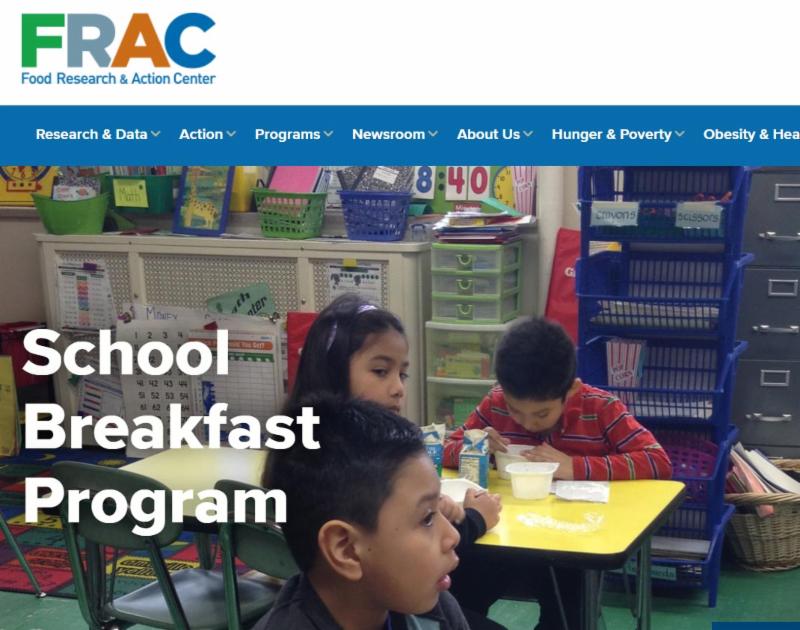
Listened to a great TED talk recently about how crucial it is for kids to get a nutritious breakfast either at their school or before they get to school. If breakfast is not served at you local school you should try and get them to do it. Schools that serve breakfast to all students consistently show improved test scores, better grades and less disciplinary problems.

Want a simple way to improve the education system? The benefits on health and learning of providing a nutritious breakfast are very clear. It is one of the easiest ways of helping every school and all their students be more successful.
What can we expect our kids to learn if they're hungry or eating diets full of sugar and empty of nutrients? Former White House Chef and food policymaker Sam Kass discusses the role schools can play in nourishing students' bodies in addition to their minds.

This talk was presented at an official TED conference, and was featured by our editors on the home page.